Matte Cream vs Matte Pomade vs Pomade: Which One Do You Want?
Three products, one real difference — what each one leaves on the strand
The short answer
Pomade shines and holds hard. Matte pomade holds hard without the shine, because it is built on wax or clay. Matte cream is the lightest of the three: it goes matte from a starch or clay dispersed through a cream rather than a wax body, so the hold is softer and the finish reworks under your fingers instead of setting. Choose by how much you want to be able to change your mind at 3pm.
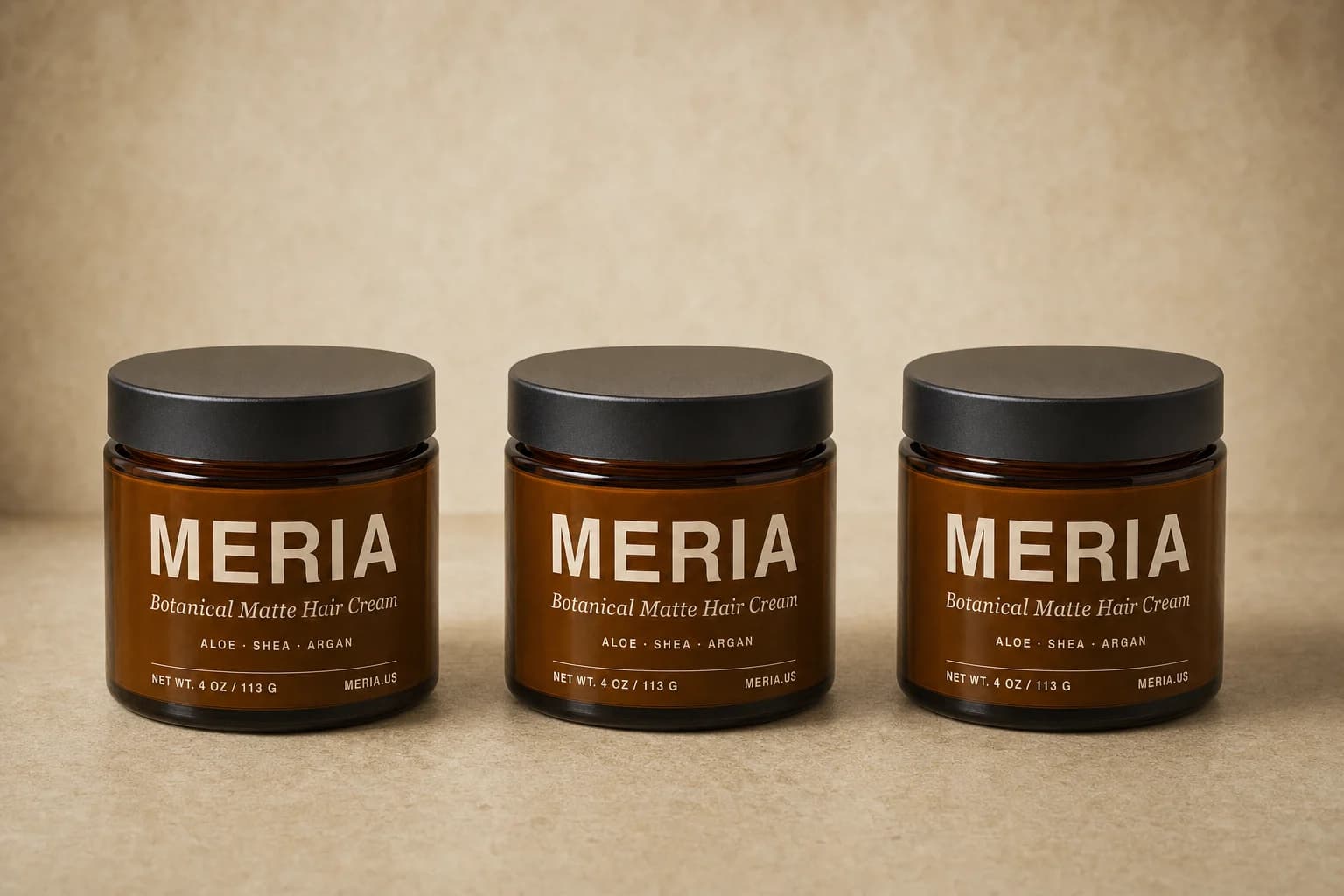
Botanical Matte Hair Cream
A silicone-free hair cream, built like skincare.
What Is Matte Hair Cream?
Matte hair cream is a styling product meant to add texture and control without shine. Unlike a gel or a pomade, a cream distributes through the hair rather than setting on it, which is what gives the natural, "unstyled" look — and why it can be reworked with your fingers instead of cracking.
Matte creams reach that finish two ways. A fine powder — arrowroot starch, kaolin clay — dispersed through the cream scatters the light landing on the strand; a light base without a silicone or wax film simply never adds the shine in the first place. Powders also absorb oil, which is the point of a mattifier and the reason they can read dry by the end of a day, so neither route is strictly better.
What Is Pomade?
Pomade is a heavier styling product that provides strong hold and high shine. Traditional pomades are oil-based (using petroleum or mineral oil), while modern versions are often water-based for easier washout.
Pomade excels at slicked-back styles, side parts, and any look where you want hair to stay in place with visible shine. It's been popular since the 1920s for good reason — nothing else creates quite the same polished look.
What Is Matte Pomade? (And How It Differs From Both)
Matte pomade sits between the two. It is still a pomade — a firm product built on waxes or clays, usually water-based so it rinses more easily than an oil pomade — but it is formulated to dry down without gloss. It holds harder than a cream and shines less than a classic pomade.
The practical difference is what the product leaves on the strand. A matte pomade removes shine by adding something opaque: clay, or a wax with a matte finish. That is why it holds firmly, and also why it can feel stiff, reworks poorly once it sets, and builds up over successive days. A matte cream removes shine with a light powder that scatters light rather than sealing the hair, so the hold is gentler and the finish stays reworkable.
In short: if a product is matte because of wax, expect firm hold and stiffness. If it is matte because of starch or clay dispersed in a cream, expect softer hold and movement. Reading the first five ingredients tells you which one you are holding.
Key Differences at a Glance
| Factor | Matte cream | Matte pomade | Pomade |
|---|---|---|---|
| Finish | Matte, natural | Matte, flat | Shiny, polished |
| Hold | Light to medium | Medium to strong | Medium to strong |
| What makes it matte | Starch or clay dispersed in a cream | Wax or clay body | Nothing — it is meant to shine |
| Reworkable | Yes, loosens under the fingers | Sets firm, resists restyling | Pliable but re-slicks |
| Washout | Easy, one shampoo | Usually easy if water-based | May need multiple washes |
| Buildup | Minimal | Can accumulate | Can accumulate |
| What the label says about the scalp | Most say nothing; a few permit roots | Most say nothing either way | Most say nothing either way |
| Best for | Casual, textured, moveable | Structured looks, no shine | Formal, slicked styles |
What the labels actually tell you, by product type
Directions were read from 74 leave-in styling products across 23 brands in September 2026, to find out what each type actually says about where on the head it goes. The pattern is not the one most comparisons assume.
| Product type | Counted | Silent | Permit | Restrict |
|---|---|---|---|---|
| Creams, balms, butters | 31 | 20 | 7 | 4 |
| Pomades, clays, waxes, pastes | 17 | 13 | 2 | 2 |
| Leave-in conditioners | 12 | 5 | 3 | 4 |
| Gels and custards | 7 | 5 | 2 | 0 |
| Hair oils | 3 | 0 | 0 | 3 |
Two things stand out. Pomades and clays — the products most often assumed to carry a scalp warning — mostly carry no instruction at all: 13 of 17 said nothing either way. And every hair oil in the sample restricted application to mid-lengths and ends, which is the only category in the count where the guidance was unanimous.
So “avoid the scalp” is not a property of pomade as a category. It is a property of particular formulas, and the only way to know is to read the directions on the one in front of you. The three hair-oil rows are the sample's smallest group, so treat that unanimity as a signal rather than a settled fact.
When to Choose Matte Cream
Matte cream is the better choice when you want:
- A natural, "I didn't try too hard" look
- Texture and movement without stiffness
- Control over frizz and flyaways
- A product that washes out easily
- No greasy feeling by midday
- Volume in fine or thinning hair
When to Choose Pomade
Pomade is the better choice when you want:
- A polished, formal look
- Slicked-back or side-part styles
- High shine and definition
- Strong hold that lasts all day
- A classic, vintage aesthetic
The Ingredient Difference
The fundamental difference between these products comes down to ingredients. Pomades rely on waxes and oils to create hold and shine. Matte creams use lighter bases and often include oil-absorbing ingredients.
Quality matte creams use ingredients like:
- Arrowroot powder — fine plant starch that scatters light
- Kaolin clay — gentle mineral that mattifies
- Aloe vera — a light liquid base, itself mostly water
- Natural butters — conditioning without greasiness
These ingredients create actual matte texture rather than just masking shine temporarily.
The Bottom Line
Neither product is objectively "better" — they serve different purposes. Matte cream gives you natural texture and everyday versatility. Pomade gives you polished hold and classic shine.
Most people benefit from having both in their routine: matte cream for daily wear, pomade for special occasions or when a more formal look is needed.
Dense in the jar. Light on the hair.
Thick in the jar does not have to mean heavy on the hair, and this formulation is built on that premise rather than around it. The body comes from a gel network — two fatty alcohols set up with a conditioning emulsifier — which is dense at rest and breaks the moment it meets finger shear. That is why a very small amount distributes. Behentrimonium methosulfate binds to the strand and stays there until the next wash, so the conditioning is on the hair rather than in the jar; olive squalane absorbs instead of sitting on top. Many styling creams get their slip from a silicone that does not dissolve in water, which can build up until hair needs clarifying to feel clean. There is no silicone here, so there is no silicone film to clarify out.
4 oz / 113 g · 17 ingredients, each one published with the reason it is in there.
Questions
- What is the difference between matte pomade and regular pomade?
- Both are firm, wax- or clay-based products that hold hard. The difference is the finish: a regular pomade is formulated to shine, and a matte pomade is formulated not to, usually by adding clay or a matte wax. Hold and washout are broadly similar; the look is not.
- Is matte cream or matte pomade better?
- Neither is better in general — they fail differently. Matte pomade holds harder and sets, so it suits a structured look you do not intend to touch again. Matte cream holds more lightly and stays reworkable, so it suits texture and movement. If a style has to survive a day without adjustment, pomade; if you want to run your hands through it, cream.
- Can I use both matte cream and pomade together?
- Yes. Apply matte cream first through the whole head for texture and control, then a small amount of pomade on specific sections for definition or shine. Start with less than you think you need — layering two products is the fastest way to a greasy result.
- Which lasts longer throughout the day?
- Pomade and matte pomade typically hold longer, because wax sets. They also take more effort to wash out. A matte cream offers lighter hold that is easier to restyle, which is a trade rather than a shortcoming.
- Which is better for thinning hair?
- Matte cream, usually. It adds texture and the appearance of volume without weighing hair down, and shine tends to make thinning hair read thinner. A heavy wax product can separate hair into visible clumps, which has the same effect.
- How do I tell which type a product is from the label?
- Read the first five ingredients. A wax or clay high in the list means it will set firm. A starch such as arrowroot, or a clay dispersed in a cream base, means it goes matte by scattering light rather than sealing the strand — lighter hold, reworkable finish.
- Do any of these wash out without a clarifying shampoo?
- Water-based products generally do; oil- or petrolatum-based pomades often do not, and silicones need clarifying regardless of the product type. If a product lists silicones or petrolatum near the top, expect to work harder to remove it.