How to Reduce Frizz Without Silicones
5 natural methods that actually work
The short answer
Yes. Frizz is mostly a cuticle lifting in humidity, and a silicone is one way to lie it flat — a film that needs clarifying out later. Butters, plant oils and a conditioning agent that binds to the strand smooth it without that film, and a fine powder such as arrowroot or kaolin changes how the light reads rather than the cuticle itself.
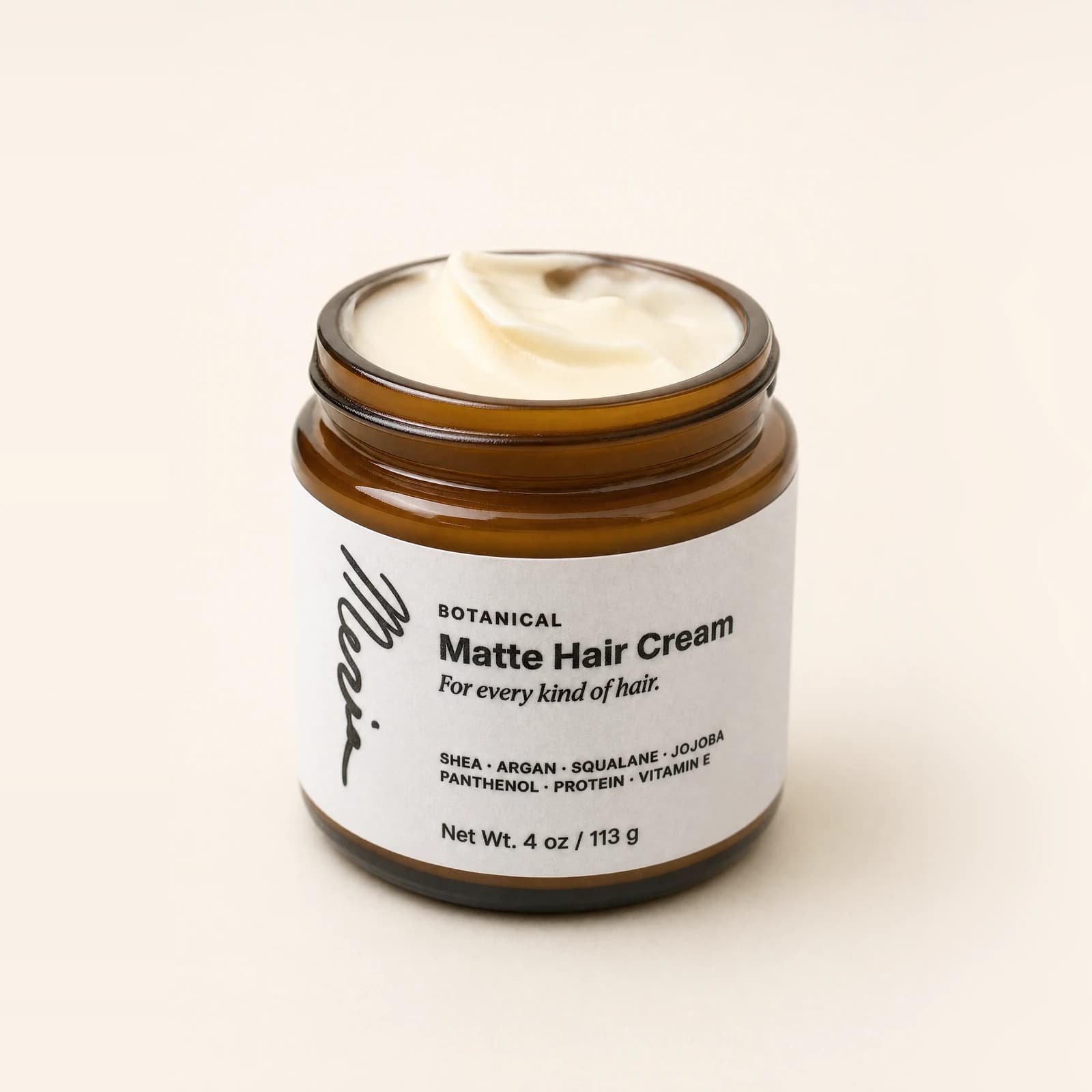
Botanical Matte Hair Cream
A silicone-free hair cream, built like skincare.
Why Silicones Are Problematic for Frizz
Silicones seem like a miracle ingredient at first. They coat the hair shaft, creating instant smoothness and shine. Frizz disappears. Hair feels silky. Problem solved — or so it seems.
The issue is that silicones don't address why frizz happens. They just mask it temporarily while creating new problems: buildup that weighs hair down, a barrier that prevents moisture from entering or leaving the hair shaft, and dependency on clarifying shampoos that strip hair of natural oils.
The Buildup Cycle Explained
Here's what typically happens with silicone-based products:
- You apply a silicone product — hair looks great
- Silicone doesn't fully wash out — it accumulates
- Hair starts feeling heavy and looking dull
- You use clarifying shampoo — strips natural oils too
- Hair becomes dry and frizzy without the silicone
- You apply more silicone — the cycle repeats
Breaking this cycle requires both removing silicones and replacing them with ingredients that genuinely improve hair health.
5 Silicone-Free Frizz Solutions
1. Arrowroot Powder (Light Scattering)
Arrowroot is a fine plant starch. Dispersed through a cream it scatters light rather than sealing the strand, so hair reads matte and textured rather than slick. Unlike a silicone, it leaves nothing wrapped around the hair to clarify out later.
Look for styling products with arrowroot powder, or use it as a dry shampoo alternative between washes.
2. Kaolin Clay (Moisture Balance)
Kaolin is a gentle white clay that helps balance moisture levels in hair. It absorbs excess oil without stripping natural moisture, creating an environment where frizz is less likely to occur.
Kaolin also adds texture and body to fine hair, making it a dual-purpose ingredient for frizz control and styling.
3. Natural Butters (Nourishment)
Plant-based butters like shea, mango, and illipe provide genuine nourishment to hair. Unlike silicones that sit on top of hair, these butters can penetrate the hair shaft and address dryness — a fundamental cause of frizz.
The key is using products with the right balance of butters — enough to condition, but not so much that hair feels heavy or greasy.
4. Aloe Vera (Hydration)
Aloe vera is a natural humectant that helps hair retain moisture without creating buildup.
Well-hydrated hair is less likely to absorb humidity from the air — a major cause of frizz in humid climates.
5. Light Oils (Smoothing)
Light plant oils, such as argan and jojoba, can help smooth the hair cuticle. These oils are lightweight enough to absorb without leaving residue.
A small amount of these oils can tame flyaways and add shine without the buildup associated with silicones.
What Actually Causes Frizz
Understanding the root causes of frizz helps you choose the right solutions:
- Damaged cuticles — rough, raised cuticles catch on each other
- Humidity — dry hair absorbs moisture from air, swelling unevenly
- Excess oil — sebum causes hair to clump and separate unevenly
- Static — dry conditions cause individual strands to repel each other
- Product buildup — accumulated residue disrupts hair's natural balance
The Transition Period
When you stop using silicones, expect a transition period of 2-4 weeks. During this time, old silicone buildup washes out and your hair adjusts to producing the right amount of natural oils.
Hair may feel worse before it feels better. This is normal and temporary. Once the buildup is gone and your scalp rebalances, most people find their hair is healthier, more manageable, and less prone to frizz.
The key is committing to the transition and having the right silicone-free products ready to support your hair during this adjustment period.
Meria makes one: a silicone-free styling cream that smooths and softens rather than holding, with every ingredient published beside the reason it is there. It is fragrance-free, and the directions permit the roots.
Dense in the jar. Light on the hair.
Thick in the jar does not have to mean heavy on the hair, and this formulation is built on that premise rather than around it. The body comes from a gel network — two fatty alcohols set up with a conditioning emulsifier — which is dense at rest and breaks the moment it meets finger shear. That is why a very small amount distributes. Behentrimonium methosulfate binds to the strand and stays there until the next wash, so the conditioning is on the hair rather than in the jar; olive squalane absorbs instead of sitting on top. Many styling creams get their slip from a silicone that does not dissolve in water, which can build up until hair needs clarifying to feel clean. There is no silicone here, so there is no silicone film to clarify out.
4 oz / 113 g · 17 ingredients, each one published with the reason it is in there.
Questions
- Why do silicones cause buildup?
- Silicones (ingredients ending in '-cone' like dimethicone) coat the hair shaft and don't fully wash out with regular shampoo. Over time, this coating builds up, making hair feel heavy, look dull, and actually trap moisture imbalances that cause more frizz.
- How long does it take to see results after quitting silicones?
- Most people notice a difference within 2-4 weeks. There's often a transition period where hair feels worse as old silicone buildup washes out, but after that, hair typically becomes more balanced and manageable.
- Are all silicones bad for hair?
- Not necessarily. Water-soluble silicones wash out more easily and cause less buildup. However, many people find their hair is healthier and more manageable without any silicones once they find the right natural alternatives.
Read next
- Silicone in Hair Products: Which Kinds Build Up, and Which Don't
- Why Your Hair Feels Greasy After Styling Products
- Kaolin Clay for Hair: Benefits, Uses, and Why It Creates Matte Texture
- Arrowroot Powder for Hair: How a Starch Makes Hair Look Matte
- Matte Cream vs Matte Pomade vs Pomade: Which One Do You Want?