ForFace and body
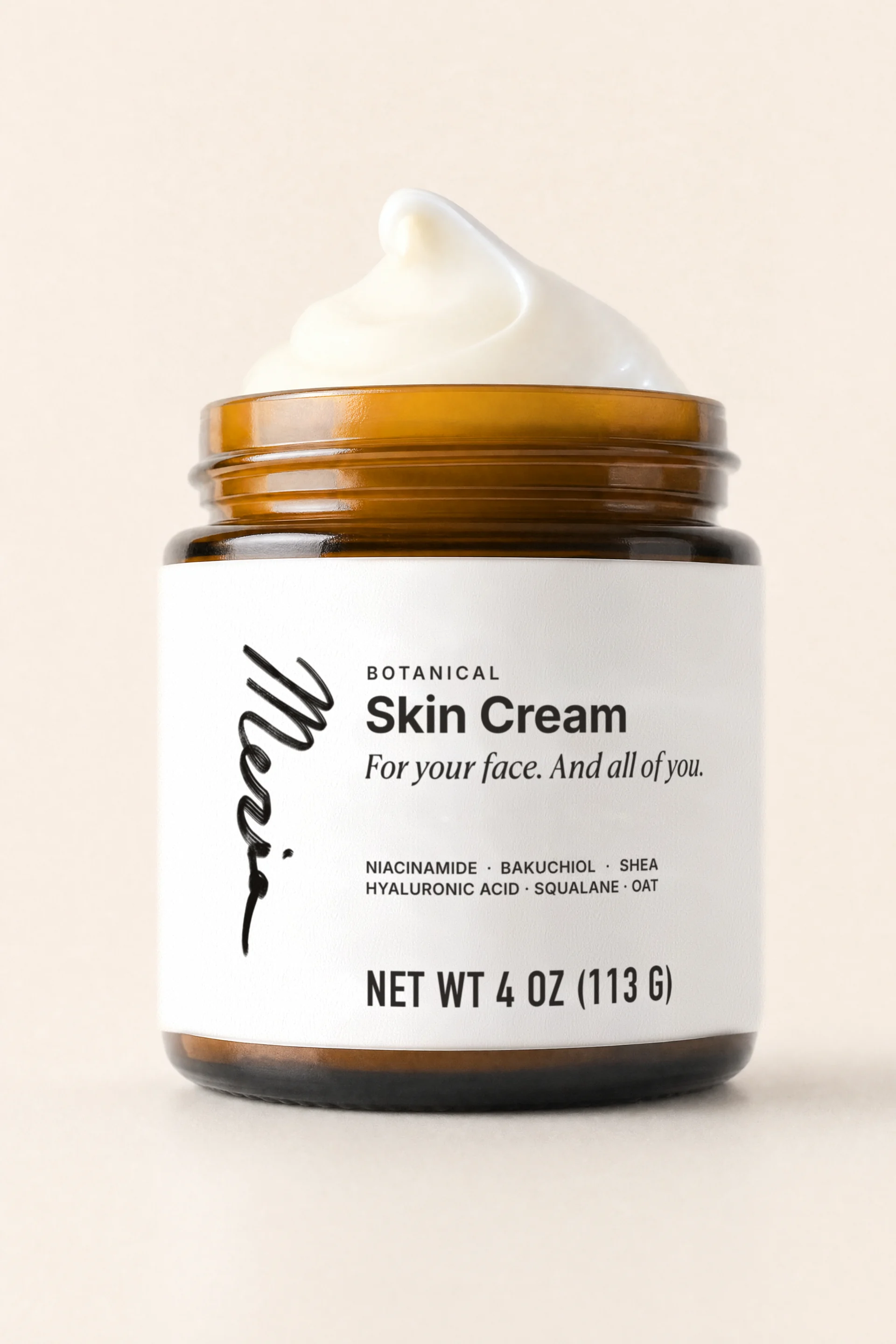
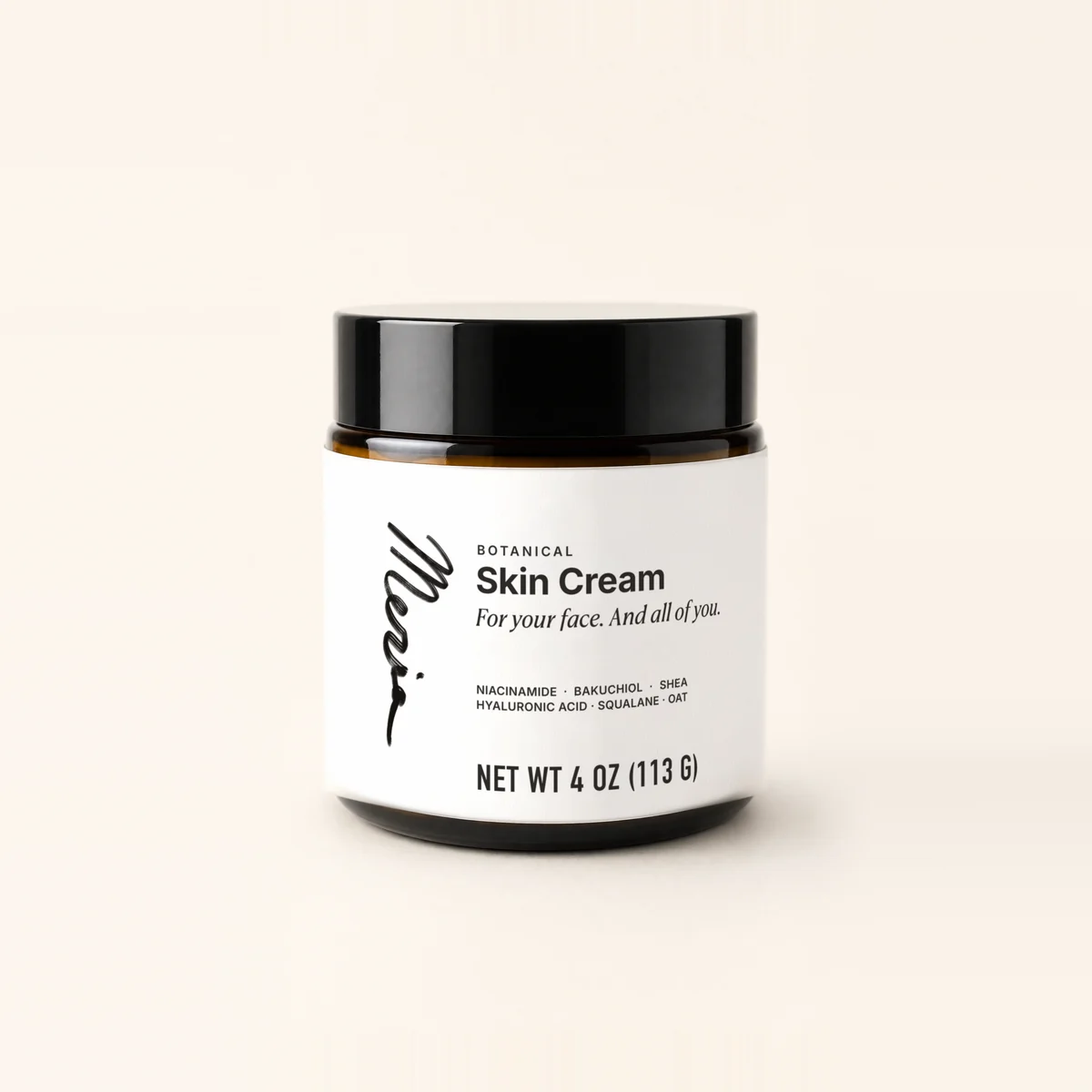
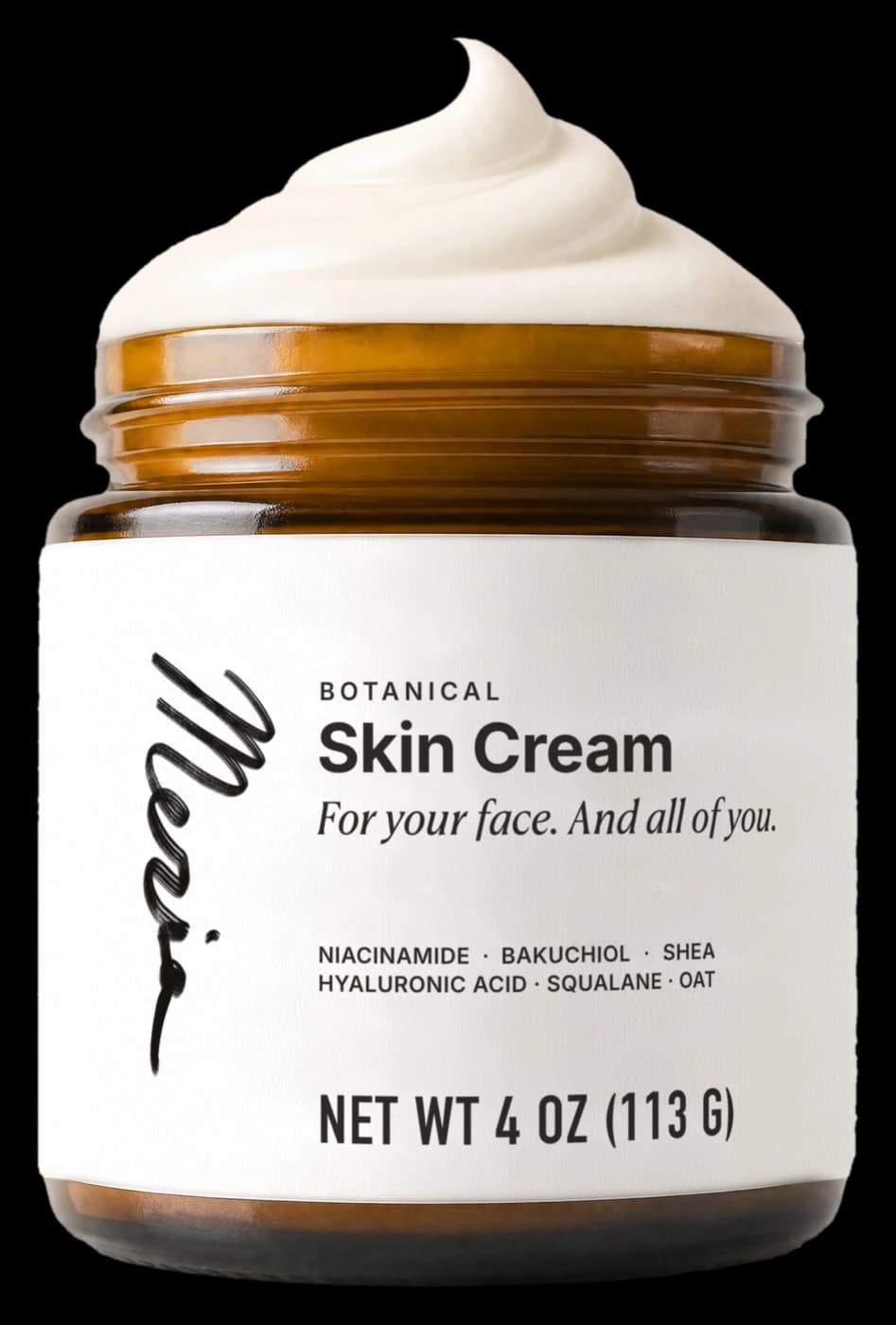
Botanical Skin Cream
A fragrance-free moisturizer for face and body.
Complimentary shipping in the United States. Unopened jars may be returned within 14 days of delivery.
Giving it? Write a note at checkout and it goes in the box. Order by December 14 for Christmas Eve.
In brief
| For | Face and body |
|---|---|
| Scent | Fragrance-free |
| Coconut oil | None |
| Ingredients | 25, each with its amount |
| Size | 4 oz / 113 g |
What it is
A rich cream with a triple-butter system of shea, mango and rare Bornean illipe. On that base sit the actives: niacinamide at 4% to strengthen the barrier and even tone, bakuchiol at 0.5%, the level of the trial that compared it with retinol, and hyaluronic acid with glycerin and betaine to hold water in. Olive squalane, jojoba and marula absorb rather than sit on top. Coconut-oil-free and fragrance-free, in 4 oz amber glass.
Before you buy
For external use only. Contains oat, shea and soy. Patch test if sensitive.
Fragrance-free. No essential oils, no synthetic “Parfum” — the only scent is the soft natural note of the botanical base.
Why it is built this way.
Made to be rich enough for the body and good enough for the face, to one rule: an ingredient goes in only if it does a job nothing else in the jar does, and nothing cleaner could do it better.
Three butters, three jobs.
Shea for the soft cushion, mango for body, and illipe, the firmest, for the rich set in the jar.
Actives at the levels the research used.
Bakuchiol is formulated at 0.5%, the level of the trial that compared it with retinol. Niacinamide is formulated at 4%, the level of the trial on fine lines. Both trials are cited in the ingredient list below.
Water held in, three ways.
Glycerin draws it in, betaine softens the tack glycerin can leave, and hyaluronic acid holds it at the surface.
Light oils, so it absorbs.
Olive squalane, jojoba and marula sit between the butters, so it goes on rich and is gone in a minute.
Nothing for show.
No fragrance, no essential oils, no coconut oil, no mineral oil or petrolatum, and no extract added in a pinch to be named on the front.
Checked past the label.
Every raw material is checked against a published clean-beauty standard, including the preservatives that can arrive hidden inside another ingredient.
The whole label, by amount.
Every ingredient on the label, in order, with how much of it is in the jar and the reason it is there. Nothing is left off.
- WaterThe carrierthe carrier, and most of the jar
Water (Aqua)
Other creams give their water a trademarked name and a backstory. Meria calls it water. It is listed first because there is the most of it, and it carries everything else: the butters and oils, held through it as fine droplets, and the ingredients that only dissolve in water: niacinamide, panthenol and betaine. Without it the jar would be a solid balm. That is the whole secret.
- Shea butterMajora major ingredient
Butyrospermum Parkii (Shea) Butter
The melt-in. Softens at skin temperature, so the cream breaks down on contact instead of sitting on top.
- GlycerinMajora major ingredient
Glycerin
A humectant — it pulls water in and holds it. Plain, cheap, and one of the most reliably useful things in any moisturiser.
- Mango butterKeya key ingredient
Mangifera Indica (Mango) Seed Butter
The middle butter — firmer than shea, lighter than illipe, and low in odour. Body without heaviness.
- Niacinamide4%formulated at 4%
Niacinamide
The most-studied ingredient in the jar. Supports the skin barrier and evens the look of tone and texture.
Formulated at 4%, the level used in an 8-week placebo-controlled, split-face trial on fine lines around the eyes, where the niacinamide side improved significantly more than the side without it. Kawada et al., Journal of Dermatology, 2008; 30 people.
- Olive squalaneKeya key ingredient
Squalane
Olive-derived. Absorbs rather than sitting on top, which is what separates a cream that softens from one that coats.
- Illipe butterKeya key ingredient
Shorea Stenoptera (Illipe) Seed Butter
A rare high-melt butter from Borneo. The firmest of the three butters, and the reason the skin cream sets richer than it spreads.
- BetaineKeya key ingredient
Betaine
A humectant from sugar beet. Holds water without the tack that glycerin alone can leave.
- Plant emulsifierKeya key ingredient
Glyceryl Stearate Citrate
The emulsifier that makes oil and water into one cream. Plant-derived, and gentler than the PEG-based emulsifiers it replaces.
- Jojoba oilKeya key ingredient
Simmondsia Chinensis (Jojoba) Seed Oil
Technically a liquid wax rather than an oil, and the closest botanical match to what skin already makes. It absorbs instead of pooling.
- Marula oilKeya key ingredient
Sclerocarya Birrea (Marula) Seed Oil
A light oil, high in oleic acid, that absorbs quickly rather than sitting on the surface.
- Fatty alcoholKeya key ingredient
Cetearyl Alcohol
Not the drying kind. Fatty alcohols are waxy and conditioning — the opposite of the drying alcohol on a toner label. Stabilises the emulsion and carries the texture.
- Provitamin B5Supportinga supporting ingredient
Panthenol
Holds water and gives the cream its slip.
- Colloidal oatSupportinga supporting ingredient
Avena Sativa (Oat) Kernel Flour
Soft, comforting feel on the skin.
- GluconolactoneMinora minor ingredient
Gluconolactone
Part of the preservative system, with sodium benzoate and calcium gluconate. A cream that is mostly water will spoil without one — this is the gentler way to prevent that.
- Bakuchiol0.5%formulated at 0.5%
Bakuchiol
Works on the look of fine lines and dark spots. In a 12-week trial at 0.5%, it reduced wrinkles and dark spots with no significant difference from 0.5% retinol, and caused less flaking and stinging. Purified bakuchiol, 99.9% by its supplier, not a crude babchi extract.
Formulated at 0.5%, the level used in a 12-week randomized, double-blind trial that compared it with 0.5% retinol. Both reduced wrinkle surface area and dark spots with no significant difference between them; retinol caused more flaking and stinging. Dhaliwal et al., British Journal of Dermatology, 2019; 44 people.
- Hyaluronic acidMinora minor ingredient
Hyaluronic Acid
High-molecular-weight hyaluronic acid. It holds water at the skin's surface, for immediate plumpness.
- Vitamin EMinora minor ingredient
Tocopherol
An antioxidant. Its first job is keeping the oils in the jar from oxidising, which is what makes a natural formula go off.
- Soybean oilMinora minor ingredient
Glycine Soja (Soybean) Oil
The oil the vitamin E comes dissolved in, half or more of it by weight. Listed because it is in the jar, and the reason soy is on the allergy line.
- Sodium benzoateMinora minor ingredient
Sodium Benzoate
Part of the preservative system. Unglamorous and necessary: an unpreserved water-based cream grows things within days.
- Sodium phytateMinora minor ingredient
Sodium Phytate
A chelator from rice bran. It binds the trace metals that would otherwise turn the oils, so the cream keeps.
- Lactic acidMinora minor ingredient
Lactic Acid
Added to bring the finished cream to a measured pH rather than to a fixed weight, which is why its figure is nominal. The same acid the skin's own surface uses.
- Citric acidMinora minor ingredient
Citric Acid
A trace that arrives with the illipe butter, which its maker keeps fresh with it. Listed because it is in the jar.
- Calcium gluconateMinora minor ingredient
Calcium Gluconate
Part of the preservative blend, named because it is in the jar. A mineral salt of gluconic acid, the same family as the gluconolactone beside it.
- PantolactoneTracea trace
Pantolactone
A trace that arrives with the provitamin B5. It is part of how panthenol is made, so it is listed rather than left off.
Amounts are shown as bands, except the two actives, bakuchiol and niacinamide, which are published at their formulated levels with the trial that used each. The order is by weight, as on every label. Tap an ingredient for its label name and the reason it is there. The exact recipe is kept private so it cannot be copied; nothing in the jar is unnamed or left off this list. Fragrance-free: no essential oils, no synthetic “Parfum.”
To use
Morning and night, on face and body: warm a little between the fingers and smooth it in until it disappears. In the morning, finish with sunscreen.
For external use only.
What it leaves out
- Silicones
- Parabens
- Sulfates
- Mineral oil or petrolatum
- PEGs
- Phthalates
- Coconut oil
- Synthetic fragrance
What it will not do.
- It will not hide forty secret ingredients behind the word “fragrance”.
- It will not open with something from an oil well.
- It will not put a trademark where an ingredient should be.
- It will not promise you a new face in fourteen days.
Questions, answered.
- Can it replace a retinol cream?
- Not a prescription retinoid, which has decades more evidence behind it. What it carries is bakuchiol at 0.5%, the level of a 12-week trial in which bakuchiol and 0.5% retinol reduced wrinkle surface area and dark spots by similar amounts, and retinol caused more flaking and stinging. For the gentler route, in a cream worn on face and body morning and night, this is what it is built for.
- Can it be used with a prescription retinoid?
- Yes. At night, apply the prescription first, give it a few minutes, then the cream over it; use the cream again in the morning. Fragrance-free, with niacinamide, panthenol, oat and three butters, it is a rich layer for skin a retinoid leaves dry. If the skin is already raw, ask the prescriber before adding anything new.
- Why 4% niacinamide, when some serums print 10%?
- Because 4% has a trial behind it: in a placebo-controlled, split-face study, a 4% niacinamide cream improved fine lines around the eyes over eight weeks. The best-known trials of niacinamide on the face used 4 to 5%. A bigger number on the front of a bottle is not a bigger result. Here the 4% goes everywhere the cream does, twice a day.
- Why one cream for face and body?
- So the niacinamide and bakuchiol reach every place that shows the years, the face, neck, chest and hands, not only the few square inches a serum covers. It is rich enough for dry arms and legs, absorbs on the face within a minute, and carries no fragrance to irritate either.
- Morning or night?
- Both. The bakuchiol trial applied it twice a day, and the jar says the same: morning and night, face and body. In the morning, finish with sunscreen.
- Can it be used on the face?
- Yes. It is made for face and body, with no fragrance and no essential oils. Patch test first if your skin is highly reactive.
- Is it coconut-oil-free?
- Yes. There is no coconut oil in it, and no fractionated coconut. Two ingredients, the fatty alcohol and the glycerin, are of a kind commonly made from coconut or palm, so anyone who reacts to coconut derivatives should patch test first.
- Will it feel greasy?
- No. The squalane and triple-butter system is chosen to absorb rather than sit on top. Rich, not greasy. Squalane mimics the skin’s own oils, so it sinks in instead of staying on the surface.
- Is there a subscription?
- Yes. The skin cream is $79 as a subscription instead of $88, delivered every 2, 4, 6, 8, 10 or 12 weeks as you choose, shipped free. A reminder arrives three days before each charge with a link to skip that delivery, and the interval can be changed or the subscription cancelled online at any time.
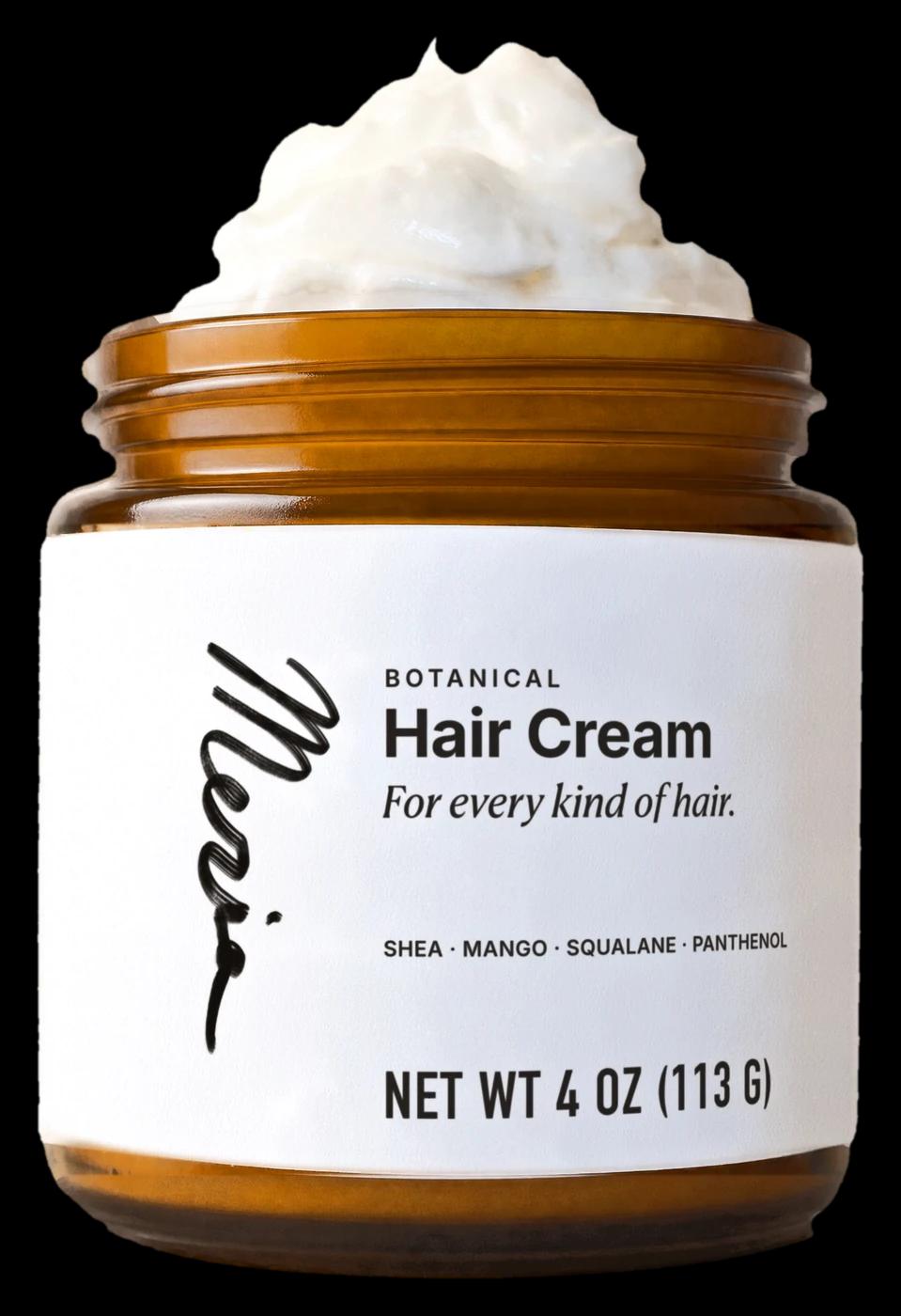
Both creams, together.
Botanical Skin Cream and Botanical Hair Cream in one shipment, $16 less than buying them separately.
Free shipping in the United States on every order.
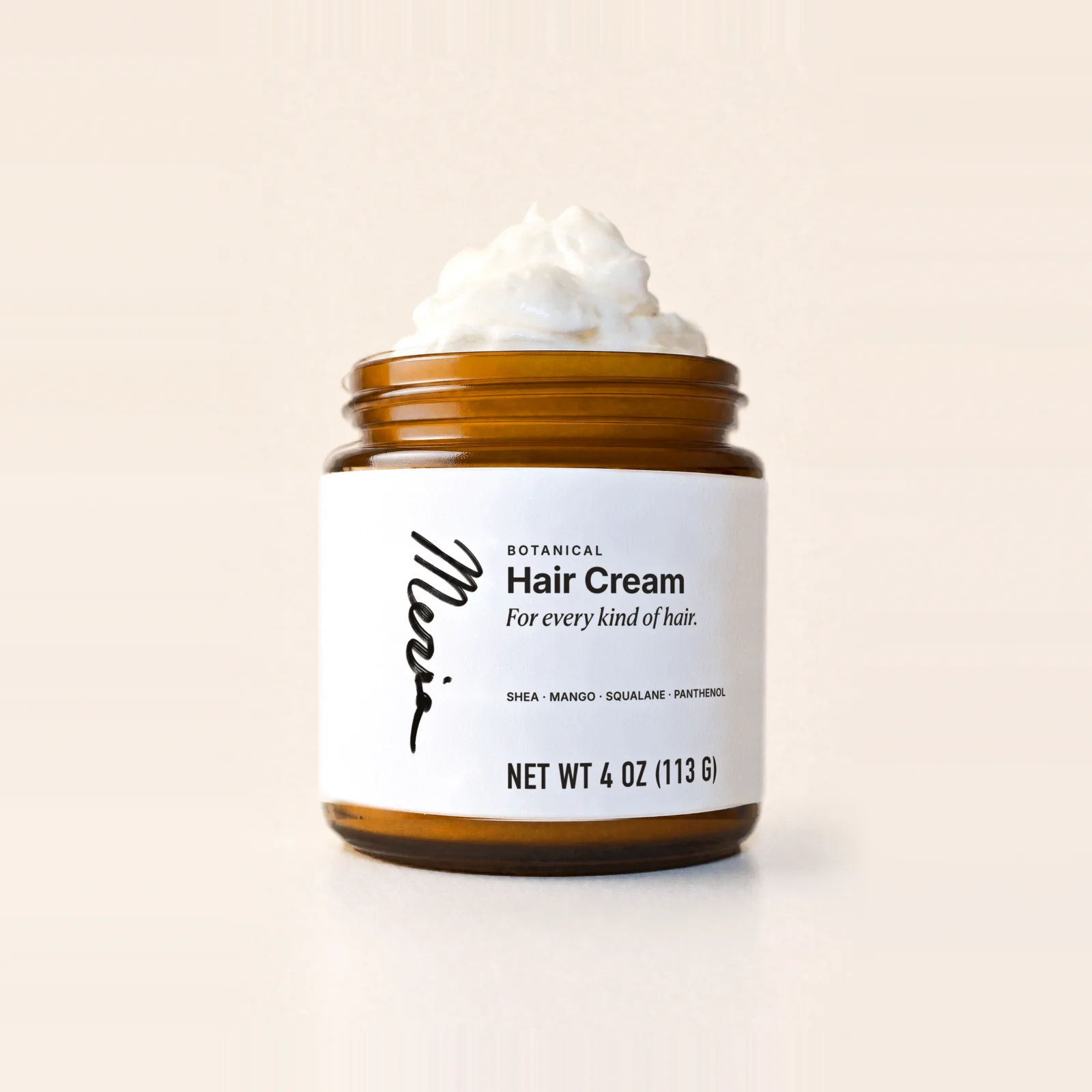 The other creamBotanical Hair Cream