Why Your Hair Feels Greasy After Styling Products
And how to fix it
The short answer
That greasy feeling is usually the product rather than the hair. Ingredient lists run in order of weight, and half of the leave-in products surveyed here carry an oil, butter or wax among their first five ingredients — so a small amount goes a long way, and too much sits on the strand. Read where the fats sit on the label, and use less than the jar suggests.
Botanical Matte Hair Cream
A silicone-free hair cream, built like skincare.
The Real Culprit: Your Product, Not Your Hair
When your hair feels greasy by midday, most people blame their hair type or assume they need to wash more often. But in most cases, the real culprit is the styling product itself.
Many styling products are designed to create immediate results — smoothness, shine, hold — without considering what happens 4-6 hours later. The ingredients that create those instant effects often become liabilities as the day goes on.
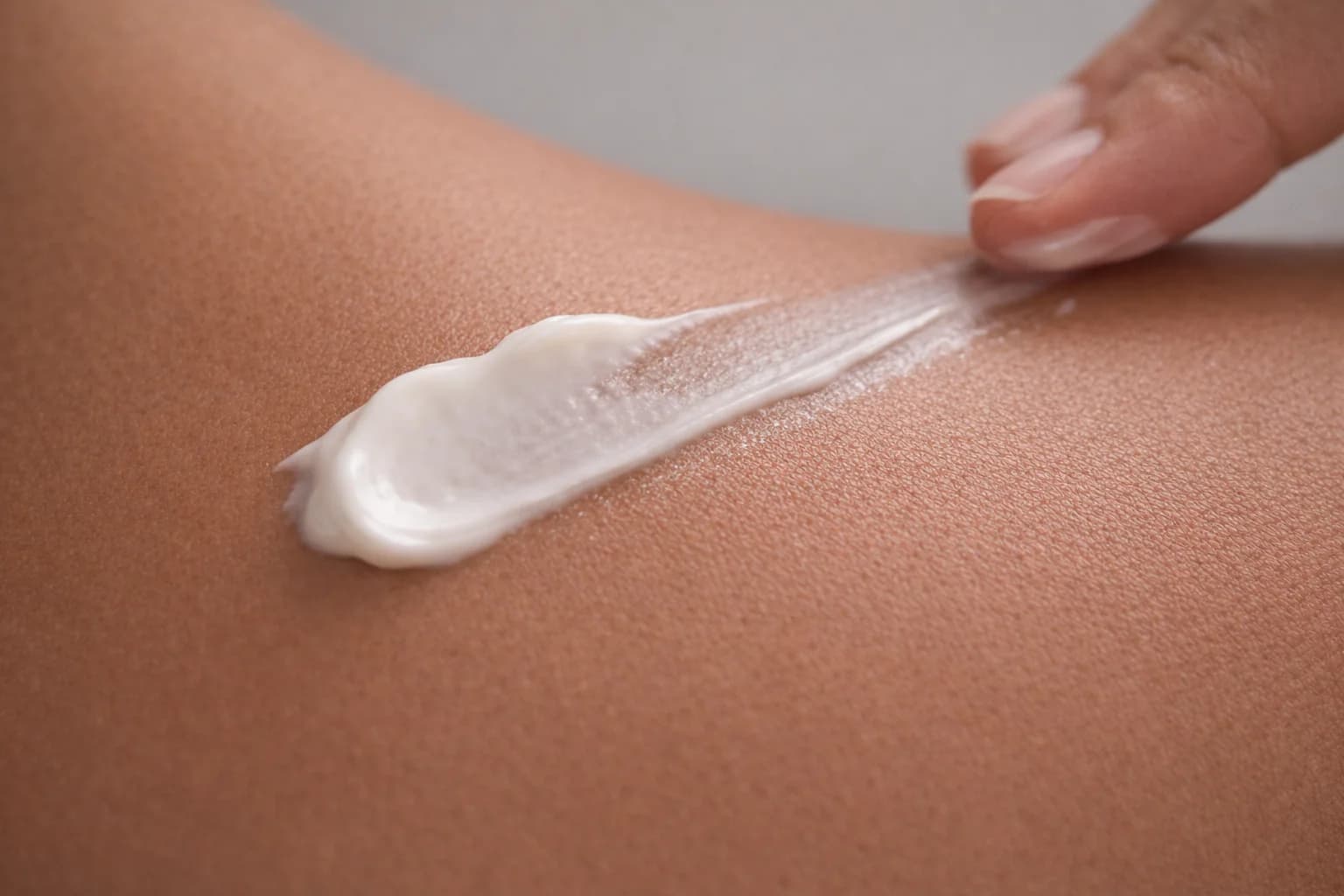
Common Culprits in Styling Products
Silicones Migrating
Silicones such as dimethicone are added for instant smoothness, and the water-insoluble ones stay on the strand until a thorough wash removes them. Applied daily onto what the last application left behind, that film accumulates, and accumulation reads as weight: hair that goes flat sooner, feels slick rather than soft, and looks dull where it used to shine.
Which silicone matters. The volatile ones evaporate and the PEG-modified ones rinse out; it is the water-insoluble ones that stay. Which kinds build up covers how to tell them apart on a label.
Heavy Oils Pooling
Many styling products contain heavy oils (mineral oil, coconut oil, castor oil) for conditioning and shine. These oils warm up from body heat throughout the day and naturally flow downward toward the scalp.
The result: roots that look increasingly oily while ends might actually feel dry. The oil didn't disappear — it just moved.
Wax Buildup
Wax-based products (pomades, some creams) provide hold by coating the hair shaft. But waxes don't fully wash out with regular shampoo. Over days and weeks, this creates invisible buildup that makes hair feel perpetually heavy and greasy.
You might not notice the buildup itself — just that your hair "doesn't feel clean" even right after washing.
Over-Application
Using too much product is a common cause of greasiness, but it's often a symptom rather than the root cause. When products don't work well, people tend to use more. When products work well, a little goes a long way.
If you find yourself needing large amounts of product to get results, the formulation probably isn't right for your hair.
The Difference Between "Moisturizing" and "Greasy"
Good styling products should moisturize and condition without feeling greasy. The difference comes down to ingredient selection:
| Moisturizing | Greasy |
|---|---|
| Absorbs into hair | Sits on top of hair |
| Leaves hair soft | Leaves hair slick |
| Washes out easily | Requires clarifying shampoo |
| Consistent throughout day | Migrates and pools |
| Hair moves naturally | Hair feels coated |
Half of leave-in products carry a fat near the top of the label
Ingredient lists run in order of weight, so where a fat appears tells you roughly how much of it is in the jar. The ingredient lists of 74 leave-in styling products from 23 widely sold brands were read from each brand's own product page in September 2026; 66 published a full list.
- 33 of the 66 — exactly half — name an oil, butter, wax or similar fat among their first five ingredients.
- 59 of 66 (89%) begin with water, so the fat usually arrives second to fifth rather than first.
That is not a fault. Fat is how a cream conditions, and a product that carries a lot of it can still feel light if you use a little. It does mean the same amount squeezed from two different jars is not the same amount of oil on your hair, and it explains why “use less” works better than switching shampoos.
How this was counted. A fat is any oil, butter, wax, petrolatum, lanolin, triglyceride, squalane or ester in the first five positions. Batch codes were stripped before reading the first ingredient. Eight product pages published no ingredient list and were left out rather than guessed. A convenience sample of widely sold products, not a census; labels change with reformulation, so the date is part of the finding. The same sample is published in full on the silicone article.
What to Look for in Non-Greasy Products
The best way to avoid midday greasiness is to choose products formulated to prevent it:
- Read where the fats sit — an oil, butter or wax in the first five ingredients means there is a lot of it
- Water first — most leave-ins start with water; the ones that do not are heavier by construction
- Know what needs clarifying — a water-insoluble silicone or a wax stays until a strong wash removes it
- Judge the dose, not the jar — a cream that distributes from a small amount is doing the work a large amount would otherwise do
What will not help is a “matte” claim on the front of a pack. Matte describes how a finish looks, not whether a formula absorbs oil, and no label has to prove the second to print the first.
How to Reset Greasy Hair
If your hair currently feels perpetually greasy, you may need to reset:
- Clarify once — use a clarifying shampoo to remove buildup
- Switch products — eliminate silicones, heavy oils, and waxes
- Give it time — your scalp may take 1-2 weeks to rebalance
- Use less — start with half of what you think you need
- Apply correctly — mid-lengths and ends first, roots last (if at all)
The Bottom Line
Greasy hair after styling isn't inevitable — it's a sign that your product isn't working with your hair. The right formulation should keep hair looking fresh from morning to evening without requiring touch-ups or dry shampoo.
Read where the fats sit on the label, use less than the jar suggests, and you may find that “greasy hair” was never really about your hair at all.
Dense in the jar. Light on the hair.
Thick in the jar does not have to mean heavy on the hair, and this formulation is built on that premise rather than around it. The body comes from a gel network — two fatty alcohols set up with a conditioning emulsifier — which is dense at rest and breaks the moment it meets finger shear. That is why a very small amount distributes. Behentrimonium methosulfate binds to the strand and stays there until the next wash, so the conditioning is on the hair rather than in the jar; olive squalane absorbs instead of sitting on top. Many styling creams get their slip from a silicone that does not dissolve in water, which can build up until hair needs clarifying to feel clean. There is no silicone here, so there is no silicone film to clarify out.
4 oz / 113 g · 17 ingredients, each one published with the reason it is in there.
Questions
- Does greasy hair mean I'm using too much product?
- Sometimes, but not always. Even a small amount of the wrong product can cause greasiness. Heavy oils, silicones, and waxes will migrate and pool regardless of how little you use. The formulation matters more than the quantity.
- Should I wash my hair more often if it gets greasy?
- Not necessarily. Over-washing can actually make greasiness worse by stripping natural oils, causing your scalp to overproduce. Instead, focus on using products that don't cause the greasiness in the first place.
- Why does my hair look fine in the morning but greasy by afternoon?
- Warmth and movement redistribute what you applied, and the scalp keeps producing its own oil, which mixes with whatever is still sitting on the strand. The more fat a product carries — check whether an oil, butter or wax appears in its first five ingredients — the more there is to redistribute.