Silicone in Hair Products: Which Kinds Build Up, and Which Don't
Four kinds of silicone, what each does on the strand, and what 66 leave-in stylers actually contain
The short answer
Silicones in hair products are safe, and they work: they smooth the strand, cut combing friction and add shine. But they are not one ingredient. Volatile silicones evaporate, and PEG- or PPG-modified ones rinse out with water. Water-insoluble ones — dimethicone, dimethiconol, phenyl trimethicone — can accumulate with repeated use unless a thorough cleanse removes them. The name on the label tells you which kind you have.
Botanical Matte Hair Cream
A silicone-free hair cream, built like skincare.
What silicones do for hair
Silicones are polymers built on a backbone of silicon and oxygen. On hair, they leave a thin film over the strand. A 2025 review of silicones in hair care, published in Skin Appendage Disorders, sets out what that film does: it reduces friction during combing, limits moisture loss, adds visible shine, and smooths the cuticle so hair detangles and styles more easily. The same review cites the Cosmetic Ingredient Review panel's conclusion that the cyclic silicones are safe as cosmetic ingredients at the concentrations it specifies.
That is why silicones are in so many products, and why “is silicone bad for hair” has no single answer. The useful question is which silicone, and what it takes to wash it out.
The four kinds, and how each leaves the hair
| Kind | Names on the label | After you apply it | What removes it |
|---|---|---|---|
| Volatile | cyclopentasiloxane, cyclohexasiloxane, cyclomethicone | Helps the product spread, then evaporates as hair dries. | Nothing; it is gone once hair is dry. |
| Water-soluble | PEG-12 dimethicone, PEG/PPG-18/18 dimethicone, dimethicone copolyol | Conditions lightly and dissolves in water. | Water and any shampoo. |
| Amino-functional | amodimethicone, aminopropyl dimethicone | Clings most to damaged areas and resists stacking on itself. Lasts through several washes. | Regular washing, over several washes. |
| Water-insoluble | dimethicone, dimethiconol, phenyl trimethicone, diphenyl dimethicone | Forms a lasting film. With repeated use and a gentle cleanser, it can accumulate. | A clarifying shampoo, typically one with sulfates. |
The review groups amodimethicone with the water-insoluble silicones, because it does not dissolve in water. Chemist and science educator Michelle Wong explains why it behaves differently in practice: its positively charged groups are drawn to the negatively charged, damaged parts of the strand, and once a strand is coated they repel further amodimethicone, so it tends not to pile up.
What 66 leave-in stylers actually contain
Articles on silicone describe the kinds; they rarely say how common each one is. So the ingredient lists of 74 leave-in styling products from 23 widely sold brands were read from each brand's own product page on 19 September 2026: creams, leave-in conditioners, gels, pastes, clays, mousses, oils and pomades. Sixty-six pages published a full ingredient list, and those are counted here.
| What the ingredient list shows | Products | Share |
|---|---|---|
| No silicone | 41 | 62% |
| At least one water-insoluble silicone | 19 | 29% |
| Only water-soluble (PEG- or PPG-) silicones | 4 | 6% |
| Amodimethicone as the only silicone | 2 | 3% |
Three things in that are worth knowing before you read another label.
Silicone-free is already the majority here.Six in ten products list no silicone at all, so a “silicone-free” badge narrows the field less than it suggests.
Where a water-insoluble silicone is used, it is often a main ingredient. Ingredient lists run from most to least, and 9 of the 19 products name their water-insoluble silicone among the first five.
Silicone-free is not film-free. Of the 41 products with no silicone, 13 carry petrolatum, mineral oil, a wax or lanolin, and none of those dissolves in water either. A paste or pomade holds a shape precisely because it leaves something on the hair.
How this was counted. Every silicone on each list was sorted by its name: PEG- or PPG-modified as water-soluble; amodimethicone and aminopropyl silicones as amino-functional; cyclopentasiloxane, cyclohexasiloxane and cyclomethicone as volatile; every other silicone as water-insoluble. A product is counted under the heaviest kind it contains. Eight product pages published no ingredient list, and they were left out rather than guessed.
The limits: this is a convenience sample of widely available products, not a census, so it over-represents brands that publish ingredients online, and one brand in it formulates without silicones as a policy. Capped at four products per brand, the split holds (61% no silicone, 30% water-insoluble). A name says what kind of silicone is present, not how much. Ingredient lists change when products are reformulated, so the date is part of the finding.
The data, if you want to check it or use it
Every row is published as a CSV: product type, silicone class, the silicone names found, where the first water-insoluble one sits in the list, and whether the product carries another water-insoluble ingredient. Brand and product names are withheld. Free to reuse with attribution (CC BY 4.0).
Cite as: Meria. Silicones in 74 leave-in hair styling products. 19 September 2026. https://meria.us/learn/silicone-buildup-hair
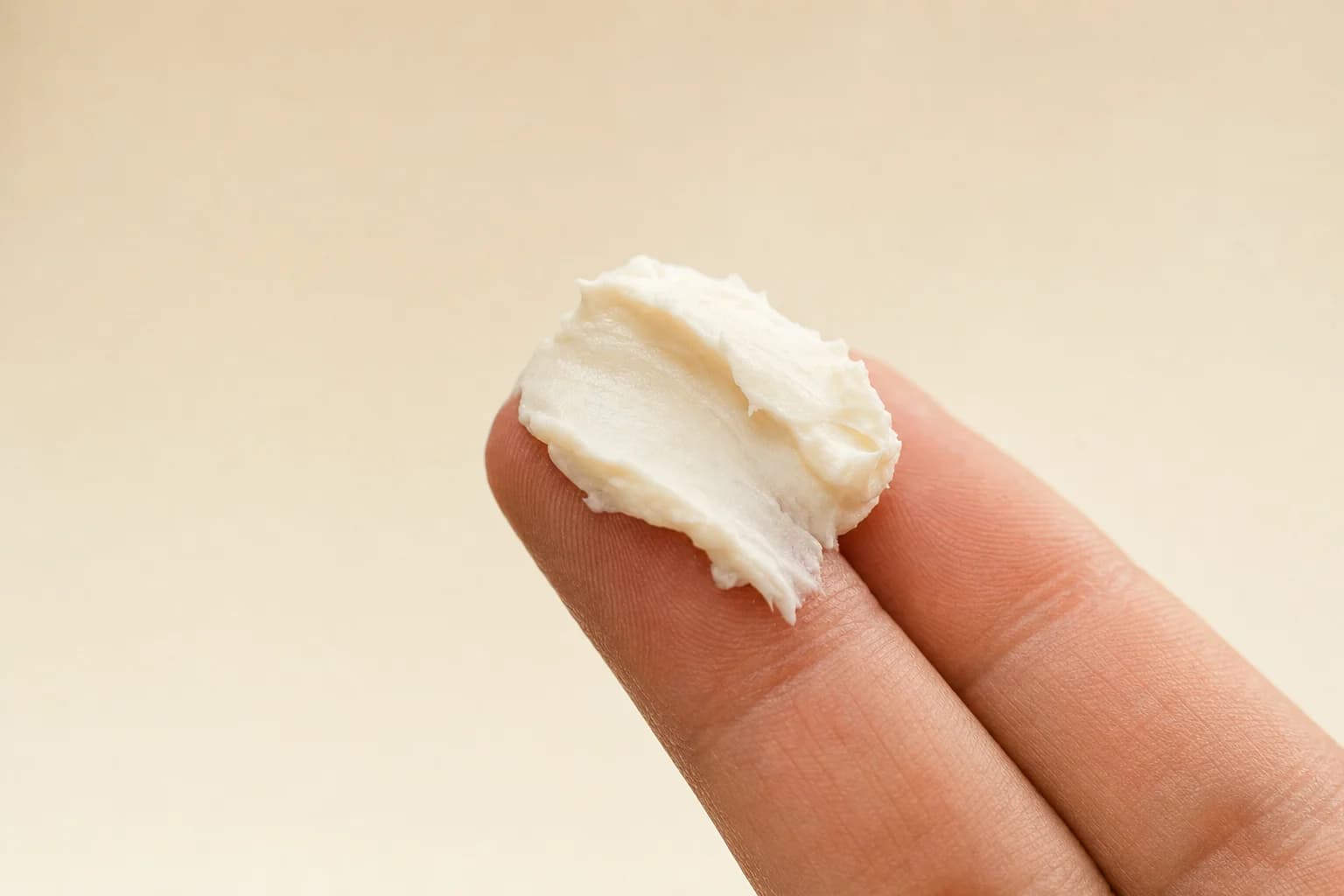
What buildup looks and feels like
Some deposit is how every conditioner works; buildup is when it keeps accumulating. The signs are hair that goes limp or flat sooner after washing, looks dull, or feels coated, and they show most on fine hair and in routines that pair water-insoluble silicones with a gentle, sulfate-free shampoo.
Weight at the root is the version people describe most precisely: roots that fall flat within a day, a parting that photographs wider than it used to, mid-lengths that tangle where they did not before. None of that is specific to silicone. It is what any residue does when it sits close to the scalp, which is why the next question matters more than the symptom.
How do you know if you have silicone or polymer buildup?
Four different things produce almost the same feel, and they come off in different ways — or, in one case, do not come off with shampoo at all. The useful question is not “is this buildup” but “where did it come from”.
| Residue | Where it comes from | What tells it apart | What removes it |
|---|---|---|---|
| Film-former | Your products: water-insoluble silicones, and non-silicone formers like PVP, VP/VA copolymer and acrylates copolymer. | It tracks what you use. Read the labels of the things you leave in; the culprit is named on one of them. | A clarifying wash, typically with sulfates. |
| Mineral | Your water, not your products. Calcium and magnesium, deposited every wash. | It tracks the tap: it ignores which shampoo you bought, arrived when you moved, and affects everyone in the house. Lather drops off. | A chelating agent, not a stronger surfactant. See below. |
| Sebum and oils | Your scalp, plus any oil or butter left in. | It returns on a schedule — worst just before a wash, gone straight after one. | An ordinary wash. If that fixes it, it was never buildup. |
| Protein | Hydrolysed proteins and quaternised protein derivatives in masks and leave-ins. | Hair described as stiff or straw-like rather than heavy, in a routine that uses several protein products at once. There is no clinical literature on this one; treat it as the last thing to suspect. | Stopping the products, and time. |
The single most useful clue is whether the problem follows your products or your tap. Film-former residue tracks what you put on: change the products and it changes. Mineral deposit tracks the water, so it does not care which shampoo you bought, it arrived when you moved house, and it affects everyone washing in that bathroom.
A shampoo that has stopped lathering points the same way. Calcium and magnesium ions form insoluble salts with the anionic surfactants shampoos are built on, precipitating them out of solution, and a surfactant that has precipitated is neither foaming nor cleaning. Poor lather in a shampoo that used to foam is usually a statement about the water, not about the hair.
Dry shampoo makes all of this worse rather than better. Starch, silica and clay are what it is; it absorbs oil and then stays where it was sprayed. It is more deposit, applied at the root, in exactly the place weight is being felt.
How to clear it
A clarifying shampoo, typically one with sulfates such as sodium lauryl sulfate, removes water-insoluble silicone. The 2025 review recommends periodic clarifying and alternating products to keep residue from building up.
A strong cleanser also removes the hair's own oils, which is why clarifying is usually occasional rather than every wash. If you would rather not clarify at all, choose silicones that don't need it (volatile, or PEG- or PPG-modified), or none.
The clarifying shampoo did nothing. Does chelating work?
A clarifying wash that changes nothing is information. Surfactants lift what they can surround — oils, waxes, film-formers — and a metal ion bound to the fibre is not that kind of problem. If a genuine clarifier has failed, mineral deposit is the first thing to suspect, and a stronger version of the same wash is the one thing that will not help.
Minerals do deposit. Washing hair in hard water for a month left calcium at 0.80% against 0.26% for distilled water, and magnesium at 0.34% against 0.078%, in a 15-volunteer electron-microscopy study. A second study, 20 volunteers over three weeks, found the magnesium difference again and significant (P = 0.001) but no significant difference in calcium (P = 0.28) — and, unlike the first, no visible surface damage at all. A third, on 70 people's hair, found hard water measurably reduced tensile strength. So: deposition is real and repeatable, and what it does to the surface is not settled.
A chelator — disodium EDTA, phytic acid, sodium gluconate, sometimes citric acid — binds a divalent metal ion at several points at once and holds it in solution, so the rinse carries it away. That is a different mechanism from washing, which is why a chelating shampoo can do something a clarifying one cannot. What nobody can hand you is the trial: there is no published study showing a chelating shampoo clearing mineral deposit from hair, or measuring how much it clears, so the claim rests on the binding chemistry and on report. Chelators are not free of cost either — in one hair study, EDTA pre-treatment increased photoyellowing under UV rather than reducing it. Worth trying on that basis, and worth knowing that is the basis.
Who does well with silicones, and who does well without
Silicones earn their place on hair that is brushed and heat-styled often, long hair that tangles, and bleached or damaged hair, where the lower friction matters most and amodimethicone goes where the damage is.
Going without, or choosing the soluble kinds, suits fine or oily hair that goes flat quickly, routines built on gentle sulfate-free shampoo with no clarifying, and any product you work in at the roots, where a lasting film adds weight where fine hair can least carry it. More on root application in can you put hair product on your scalp.
Reading a label in ten seconds
- Find the silicones: names ending in -cone, -conol, -siloxane or -silane, plus a few outliers such as polysilicone-15 and polymethylsilsesquioxane.
- Check the front of the name. PEG- or PPG- means water-soluble; amo- or amino means amino-functional; cyclo- means volatile.
- Anything else, such as dimethicone, dimethiconol or phenyl trimethicone, is water-insoluble. Near the top of the list means a main ingredient.
- Then look for the other things that don't dissolve in water: petrolatum, mineral oil (paraffinum liquidum), waxes and lanolin.
The EU rule on cyclic silicones
The European Union restricts three cyclic silicones on environmental grounds, not for any effect on hair: D4 (cyclotetrasiloxane), D5 (cyclopentasiloxane) and D6 (cyclohexasiloxane). D4 and D5 have been limited to under 0.1% in wash-off cosmetics since 31 January 2020. Under Regulation (EU) 2024/1328, all three are limited to under 0.1% in every other cosmetic product, leave-in stylers included, from 6 June 2027.
Where Meria's hair cream fits
The Botanical Matte Hair Cream contains no silicone of any kind. It is not deposit-free, because no conditioner is: its conditioning agent, behentrimonium methosulfate, binds to the strand and stays until the next wash, alongside shea and mango butter and olive squalane. The full ingredient list, with what each ingredient does, is on the silicone-free styling cream product page.
Sources
- de Melo Carvalho R, Melo DF, Kelati A, Tosti A. With or without Silicones? A Comprehensive Review of Their Role in Hair Care. Skin Appendage Disorders, 2025.
- Commission Regulation (EU) 2024/1328 amending Annex XVII to REACH as regards D4, D5 and D6. Read 19 September 2026.
- Wong M. Amodimethicone and hair conditioner myths. Lab Muffin Beauty Science.
- Srinivasan G, Chakravarthy Rangachari S. Scanning electron microscopy of hair treated in hard water. International Journal of Dermatology, 2016;55(6):e344–6.
- Alahmmed LM, Alibrahim EA, Alkhars AF, Almulhim MN, Ali SI, Kaliyadan F. Scanning electron microscopy study of hair shaft changes related to hardness of water. Indian Journal of Dermatology, Venereology and Leprology, 2017;83(6):740.
- Luqman MW, Ramzan MH, Javaid U, Ali R, Shoaib M, Luqman MA. To Evaluate and Compare Changes in Baseline Strength of Hairs after Treating them with Deionized Water and Hard Water. International Journal of Trichology, 2018;10(3):113–17.
- Millington KR, Marsh JM. UV damage to hair and the effect of antioxidants and metal chelators. International Journal of Cosmetic Science, 2020;42(2):174–84.
- Li Y et al. Effect of Ca2+/Mg2+ on the stability of the foam system stabilized by an anionic surfactant. Colloids and Surfaces A, 2016;489:423–32.
- Leave-in styling product ingredient lists, 66 products from 21 brands, read from each brand's product page on 19 September 2026 (method above).
Dense in the jar. Light on the hair.
Thick in the jar does not have to mean heavy on the hair, and this formulation is built on that premise rather than around it. The body comes from a gel network — two fatty alcohols set up with a conditioning emulsifier — which is dense at rest and breaks the moment it meets finger shear. That is why a very small amount distributes. Behentrimonium methosulfate binds to the strand and stays there until the next wash, so the conditioning is on the hair rather than in the jar; olive squalane absorbs instead of sitting on top. Many styling creams get their slip from a silicone that does not dissolve in water, which can build up until hair needs clarifying to feel clean. There is no silicone here, so there is no silicone film to clarify out.
4 oz / 113 g · 17 ingredients, each one published with the reason it is in there.
Questions
- Are silicone products good for your hair?
- They can be. Silicones reduce friction when combing, add shine and help hair detangle, and they are considered safe in hair care. The trade-off is residue: water-insoluble silicones can accumulate with repeated use unless a thorough cleanse removes them, which shows most on fine hair.
- Which silicones are best for hair?
- It depends on the routine. If you wash with a gentle shampoo and don't want to clarify, volatile silicones such as cyclopentasiloxane and PEG- or PPG-modified ones leave the least behind. For damaged or bleached hair, amodimethicone clings to the damaged areas and tends not to stack on itself. Dimethicone gives the most lasting smoothness and needs the strongest cleanse to remove.
- What are the disadvantages of silicone in hair?
- Buildup from the water-insoluble kinds, which can leave hair limp, dull or coated, especially fine hair, and the need for a clarifying shampoo, often a sulfate one, to remove it. Separately, the EU restricts three cyclic silicones on environmental grounds, in leave-on cosmetics from 6 June 2027.
- What silicones should I avoid in hair products?
- None is unsafe. If buildup is the concern, limit the water-insoluble ones (dimethicone, dimethiconol, phenyl trimethicone, diphenyl dimethicone), especially when they sit near the top of the list of a product you leave in. PEG- or PPG-modified silicones and volatile ones are the lighter choice.
- How do I remove silicone buildup from my hair?
- Wash with a clarifying shampoo, typically one containing sulfates, which removes water-insoluble silicones. Because it also removes your hair’s own oils, clarifying is usually done occasionally rather than at every wash.
- Is silicone-free better for hair?
- Not automatically. Silicone-free removes one source of buildup, but in a count of 66 leave-in stylers, 13 of the 41 silicone-free products carried petrolatum, mineral oil, a wax or lanolin, none of which dissolves in water either. Read the whole ingredient list, not the badge.
- How do you know if you have silicone or polymer buildup?
- The single most useful clue is whether the problem follows your products or your tap. Film-former residue tracks what you put on: change the products and it changes. Mineral deposit tracks the water, so it does not care which shampoo you bought, it arrived when you moved house, and it affects everyone washing in that bathroom.
- The clarifying shampoo did nothing. Does chelating work?
- A chelator — disodium EDTA, phytic acid, sodium gluconate, sometimes citric acid — binds a divalent metal ion at several points at once and holds it in solution, so the rinse carries it away. That is a different mechanism from washing, which is why a chelating shampoo can do something a clarifying one cannot. What nobody can hand you is the trial: there is no published study showing a chelating shampoo clearing mineral deposit from hair, or measuring how much it clears, so the claim rests on the binding chemistry and on report.