Why Most Hair Products Aren't Meant for the Scalp
What makes a formula scalp-compatible
The short answer
The back of most styling creams reads: 'apply to mid-lengths and ends. Avoid the scalp.' That isn't arbitrary — it's an admission. Most hair products contain silicones, polymers, and film-formers that aren't designed for skin contact. Meria's hair cream is built differently.
Botanical Matte Hair Cream
A silicone-free hair cream, built like skincare.
Read the back of most styling creams, pomades, and hair products. Somewhere in the instructions, you'll usually find a version of this: "Apply to mid-lengths and ends. Avoid the scalp."
This isn't arbitrary. It's an admission.
Most hair products contain ingredients that aren't designed for skin contact. They work by coating the hair shaft with films, polymers, and silicones that create hold, shine, or texture. These ingredients are effective for styling. They're not effective—and sometimes not safe—for skin.
Your scalp is skin. And most hair products weren't formulated with that in mind.
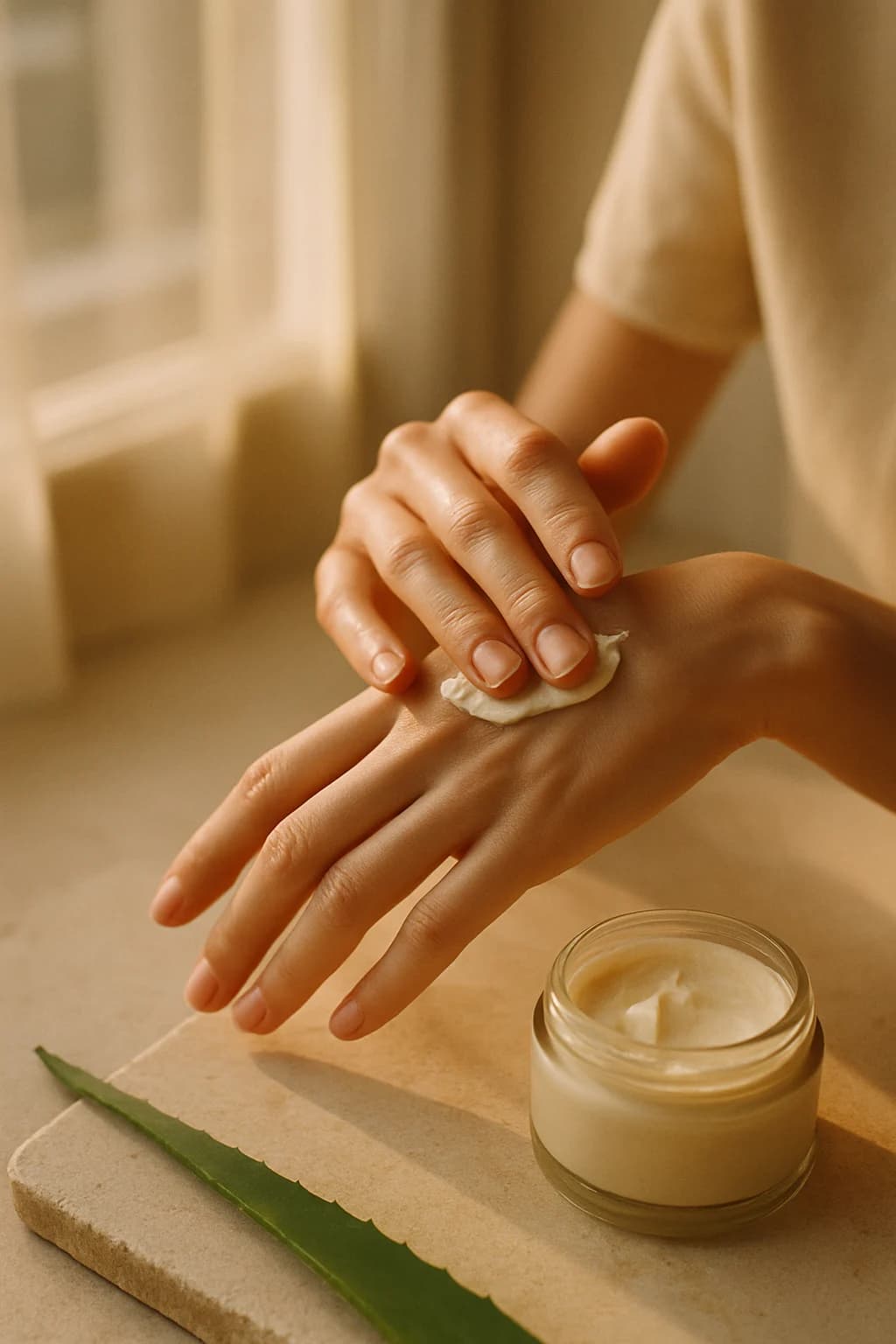
The Scalp Is Not Just "Where Hair Grows"
Your scalp is living, breathing skin. It has:
- Sebaceous glands that produce oil and need to function normally
- Hair follicles that can become clogged or irritated
- A microbiome of beneficial bacteria that maintains scalp health
- Pores that absorb what you put on them
- Nerve endings that can react to irritants
In many ways, scalp skin is more sensitive than facial skin. It is thinner in places and has a higher concentration of follicles. Yet the consumer who carefully considers what goes on the face rarely applies the same scrutiny to what is going onto the scalp inches away.
How Conventional Hair Products Work
Most styling products rely on one or more of these mechanisms:
Film-Formers
Polymers like PVP, acrylates, and polyquaterniums create a thin film around the hair shaft. This film provides hold, reduces frizz, and adds shine. But a film-former is designed to coat, and what coats the strand also reaches the scalp, where it stays until a wash removes it.
Silicones
Dimethicone, cyclomethicone, and other silicones create slip, shine, and smoothness by forming a layer over the hair cuticle. On hair, this works well initially. On scalp skin, silicones can be occlusive—preventing natural oil flow and trapping debris.
Heavy Waxes and Petrolatum
These provide strong hold and heavy conditioning but are difficult to wash out and can accumulate on the scalp over time, leading to buildup, irritation, and even hair thinning.
Drying Alcohols
Short-chain alcohols like alcohol denat, SD alcohol, and isopropyl alcohol evaporate quickly and help products dry fast. They're also drying to skin and can irritate the scalp with repeated exposure.
None of these ingredients are necessarily "bad." They serve functions in hair styling. But they're formulated with the assumption that they'll sit on hair, not skin.
Coating vs. Absorption: The Fundamental Difference
There are two basic approaches to hair product formulation:
Coating: The product sits on the surface of the hair, creating a layer that changes how hair looks, feels, or behaves. Most styling products work this way.
Absorption: The product penetrates into the hair shaft (and, when applied to roots, into the skin), delivering ingredients that condition from within.
Coating products can deliver quick results but tend to build up, require more washing, and shouldn't touch skin. Absorption-based products work more gradually but integrate with hair, don't accumulate, and can safely contact the scalp.
How Meria Formulated for Scalp Safety
Building a scalp-safe hair cream required rethinking the entire formula from the ground up:
Emulsifier Selection
The cream is held together by behentrimonium methosulfate, a conditioning emulsifier that also helps hair comb out (not a sulfate, despite the name), and cetyl alcohol, a fatty alcohol rather than a drying one. Together they give the cream its body without a silicone film.
Base Ingredients
Shea and mango butter carried in water, given their body by fatty alcohols and a conditioning emulsifier rather than by silicones.
No Silicones
No silicones in the formula. No occlusive layer forming on scalp skin. No buildup over time. No need for harsh clarifying shampoos.
No Film-Formers
No PVP, no acrylates, no polymers that create hold through coating. The formula achieves soft control through conditioning, not filming.
No Synthetic Fragrance
“Parfum” or “fragrance” can contain dozens of undisclosed chemicals, some of which are common skin sensitizers. Both Meria creams are fragrance-free — no essential oils and no synthetic fragrance, so there is nothing added for scent to react to.
What This Means in Practice
You can apply Meria at the roots. You can work it into your scalp. You can use it daily without worrying about buildup or clogged follicles.
For people with sensitive scalps, this matters enormously. For everyone else, it's simply a better relationship with your hair product—no mental "avoid the scalp" rule, no concern about what's actually touching your skin.
The Microbiome Consideration
Your scalp hosts a community of microorganisms—bacteria and fungi—that play a role in scalp health. Disrupting this microbiome can contribute to dandruff, irritation, and other scalp conditions.
Occlusive products, harsh detergents, and antibacterial ingredients can all disturb scalp microbiome balance. Meria’s formula avoids all three:
- Non-occlusive (won't trap bacteria)
- No harsh surfactants (it's a leave-in, not a cleanser)
- No antibacterial additives (the scalp's natural flora isn't the enemy)
Meria makes no medical claims about scalp health. The point is simpler: a product designed to touch skin should respect skin’s natural systems.
A Simple Test
Pick up your current hair styling product. Read the directions. Does it say to avoid the scalp, the roots, or direct skin contact?
If so, ask yourself: Why would I put something on my hair that isn't safe for the skin it grows from?
Meria Botanical Matte Hair Cream. Safe for your hair and the skin it grows from.
Dense in the jar. Light on the hair.
Thick in the jar does not have to mean heavy on the hair, and this formulation is built on that premise rather than around it. The body comes from a gel network — two fatty alcohols set up with a conditioning emulsifier — which is dense at rest and breaks the moment it meets finger shear. That is why a very small amount distributes. Behentrimonium methosulfate binds to the strand and stays there until the next wash, so the conditioning is on the hair rather than in the jar; olive squalane absorbs instead of sitting on top. Many styling creams get their slip from a silicone that does not dissolve in water, which can build up until hair needs clarifying to feel clean. There is no silicone here, so there is no silicone film to clarify out.
4 oz / 113 g · 17 ingredients, each one published with the reason it is in there.
Questions
- What ingredients should I avoid if I care about scalp health?
- Watch for silicones (dimethicone, cyclomethicone), heavy film-formers (PVP, acrylates), drying alcohols (alcohol denat, SD alcohol), and synthetic fragrance. These can sit on the scalp and build up, and some — drying alcohols and added fragrance especially — irritate skin that is already sensitive.
- How do I know if a product is truly scalp-safe?
- Check if the instructions tell you to avoid the scalp. If they do, that's your answer. Also look for 'non-comedogenic' claims and avoid heavy waxes and petroleum-based ingredients.
- Can scalp-safe products still provide styling hold?
- Yes, but through different mechanisms. Instead of coating with films, absorption-based products condition and nourish, which naturally improves texture and reduces frizz. The hold is softer but the hair feels better.